分类: apptovid

apptovid

  • Video Ads vs Image Ads for Mobile Apps: Which Converts Better?

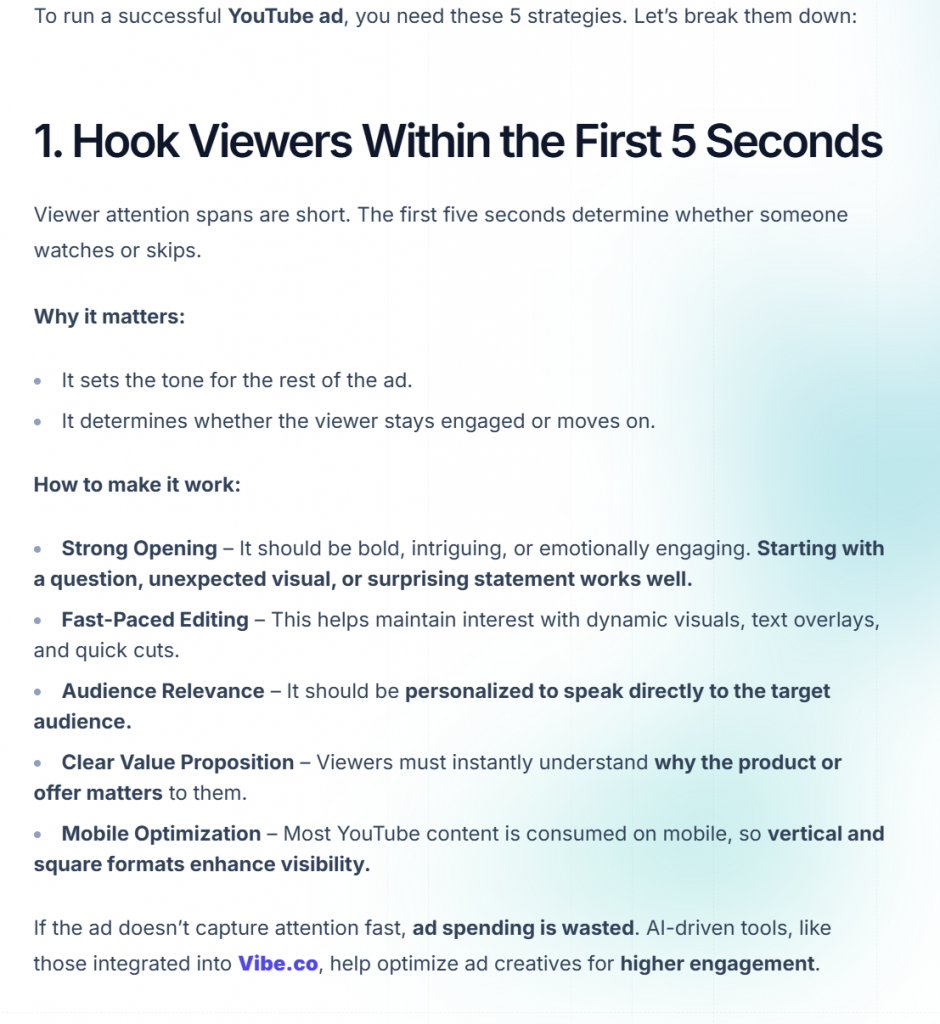
    App marketers often ask whether video ads convert better than static image ads. Video has several advantages: it can demonstrate an app, explain a workflow, create emotion, and communicate multiple ideas within a short sequence. For many mobile apps, these qualities give video more conversion potential than a single image.

    But there is no universal winner. A clear static ad can outperform a weak video, and results vary by product, audience, placement, and campaign objective. The useful conclusion is not that every video will beat every image. It is that mobile apps should test video seriously because motion can show value in ways that static creative cannot.

    Why video ads often have a conversion advantage

    Video can demonstrate the product

    An image captures one moment. A video can show a sequence: open the app, choose an option, receive a result, and take the next action. This is valuable for products whose benefit becomes clearer after viewers see how the workflow functions.

    For example, a photo-editing app can show the original image, the editing action, and the final result. A static image can show the before and after, but video can make the transformation feel immediate.

    Video can explain unfamiliar products

    New AI tools, finance apps, productivity products, and utilities may require more context than a headline and screenshot can provide. Voice, captions, interface motion, and visual labels can work together to explain the product quickly.

    Video creates stronger narrative context

    A short story can show a user problem, the app experience, and the outcome. This helps viewers understand not only what the app does, but when and why they might use it.

    Video supports multiple persuasion elements

    Within one short ad, marketers can combine a hook, presenter, app demonstration, benefit, social context, and call to action. A static image has less space to develop that sequence.

    Motion can attract attention

    In a fast-moving feed, a relevant movement or transformation can encourage viewers to pause. Attention alone does not create conversion, but it gives the ad an opportunity to communicate its value.

    Where static image ads remain valuable

    Static ads should not disappear from the creative plan. They are fast to produce, easy to understand, and useful for communicating one focused message. They can work particularly well when:

    • The product benefit is simple
    • The visual result is immediately clear
    • The audience already understands the app category
    • The offer or message can be expressed in one frame
    • The placement gives users limited time or space

    Static creative is also useful for retargeting and for converting a winning video message into a simpler format.

    A fair way to compare video and image ads

    An unfair test compares a well-produced video against an unrelated static image. To learn which format performs better, keep the underlying message as consistent as possible.

    Use the same audience and campaign objective

    Targeting different audiences or optimizing for different events makes the result difficult to interpret.

    Keep the core promise consistent

    If the video promotes time savings while the image promotes a discount, the test is comparing two messages as well as two formats.

    Use equivalent product proof

    Both versions should accurately show the same product benefit. The video may demonstrate the workflow, while the image shows the key screen and result.

    Measure downstream conversion

    Do not judge the result only by views or clicks. Compare install rate, cost per install, activation, trial starts, purchases, subscriptions, or another event connected to revenue.

    Test more than one example

    One video and one image cannot represent the entire format. Test several concepts before deciding that a channel or audience prefers one creative type.

    How to turn a static app ad into a video concept

    Existing image ads can provide an efficient starting point. Identify the strongest element in the image, then expand it into a short sequence:

    1. Turn the headline into an opening hook.
    2. Show the problem or user situation.
    3. Animate the app screenshots in workflow order.
    4. Add captions that explain the primary benefit.
    5. Show the result and a clear call to action.

    This process preserves a proven message while giving viewers more product context.

    Three video formats worth testing

    Product explainer

    Use app screenshots, motion, labels, and narration to explain how the workflow functions. This is useful for apps that need clarity.

    Story-based ad

    Show a problem, introduce the app, and present the outcome. This is useful when the value is connected to a recognizable life or work situation.

    Presenter-led or UGC-style ad

    Use a person to introduce a use case and support the explanation with real app screens. This is useful when relatability and personal context influence the decision.

    The practical answer: use images for speed and video for depth

    Static images can communicate one message quickly. Video can demonstrate, explain, and tell a story. A balanced app advertising program uses both, then lets campaign data determine which format works for each audience, placement, and stage of the funnel.

    For teams that previously avoided video because of production cost or turnaround time, AI-assisted generation makes testing more practical. The decision is no longer limited to one expensive video versus many inexpensive images.

    Turn your app screenshots into video ads with Apptovid

    Apptovid turns an app description and screenshots into short-form story-based, animated explainer, and digital-human ads. Use your existing product assets to test whether video can communicate your app’s value more effectively than static creative.
    Create a mobile app video ad with Apptovid

  • Why UGC Ads Convert for Mobile Apps and How to Create Them

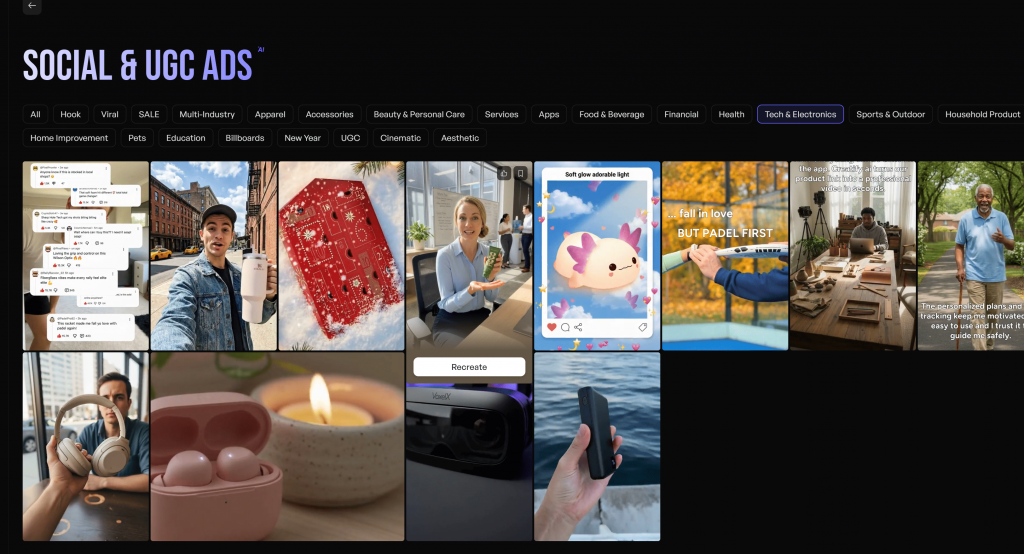
    UGC-style ads have become a common format in mobile advertising because they match the way people already consume content in social feeds. Instead of opening like a polished commercial, a UGC ad often begins with a person describing a problem, sharing a discovery, or demonstrating a useful result.

    This familiar presentation can reduce the distance between the viewer and the product. However, the presence of a presenter alone does not guarantee conversion. High-converting UGC ads combine relatability with a clear message, credible product proof, and a direct next step.

    Why UGC-style ads can improve conversion

    They feel native to short-form feeds

    Users scroll through TikTok, Instagram Reels, Facebook, and YouTube Shorts to see people, stories, opinions, and demonstrations. A presenter-led ad can fit naturally into that environment, especially when the opening addresses a recognizable problem instead of immediately delivering a corporate introduction.

    They communicate a use case quickly

    A person can explain who the app is for and when to use it in a single sentence. For example:

    “If you keep forgetting what you discussed in meetings, this app turns your recording into organized notes.”

    The sentence defines the audience, problem, and value before the video moves into the product demonstration.

    They create human context around software

    App screenshots show what a product looks like, but they do not always show why the user should care. A presenter can connect the interface to a real situation: preparing for an exam, planning a workout, organizing expenses, or completing a task at work.

    They can combine trust with product proof

    The strongest UGC ads do not rely only on a testimonial. They show the actual app, demonstrate the workflow, and support the presenter’s message with visible evidence.

    The structure of a high-converting UGC app ad

    1. Start with a specific hook

    Avoid generic openings such as “Here is an amazing app.” Use a sentence that helps the target user recognize themselves:

    • “I was spending an hour summarizing every client call.”
    • “I wanted to learn Spanish, but I could never maintain a routine.”
    • “I stopped switching between five different budgeting spreadsheets.”

    Specific hooks create more relevance than broad claims.

    2. Show the problem briefly

    The problem provides context, but it should not consume most of a short-form ad. One or two visual moments are usually enough before introducing the app.

    3. Introduce the app as the mechanism

    Show the real interface while explaining what the app does. The app should be more than a logo at the end of the video. It is the mechanism that produces the promised outcome.

    4. Demonstrate one useful result

    Choose one result that is easy to understand. A UGC video becomes less persuasive when it lists every feature. A focused message gives the viewer one clear reason to act.

    5. End with a relevant call to action

    The call to action should follow naturally from the story. Examples include trying the workflow, creating a first project, or exploring the app. Avoid urgency or promises that the product cannot support.

    Which mobile apps are a good fit for UGC ads?

    UGC-style creative is particularly useful when a product benefits from personal explanation or social context, including:

    • Fitness, wellness, and habit apps
    • Education and language-learning apps
    • AI productivity tools
    • Photo and video apps
    • Shopping and discovery apps
    • Social and lifestyle products
    • Consumer subscription apps

    For technical or complex products, UGC can still work when the presenter is supported by a clear screen demonstration.

    Common reasons UGC ads fail

    The script sounds like a corporate advertisement

    UGC style depends on natural language. Long introductions, feature lists, and exaggerated claims make the presenter feel less credible.

    The presenter never shows the product

    A personal recommendation may attract attention, but app users also need proof. Show screenshots or the real workflow early enough to connect the promise to the product.

    The opening is too broad

    “This app changed my life” can apply to almost anything. A specific problem such as missed deadlines, inconsistent workouts, or manual note-taking is easier to believe and easier to target.

    Every audience receives the same script

    Different customer groups have different motivations. Create versions for separate use cases rather than asking one video to speak to everyone.

    The ad makes unsupported claims

    Credibility matters. Claims about health, finance, income, performance, or guaranteed outcomes require particular care. The creative should accurately represent what the app can do and follow the advertising platform’s policies.

    How AI supports UGC-style production

    Producing traditional UGC at scale can involve recruiting creators, shipping briefs, reviewing footage, and requesting reshoots. AI digital-human and lip-sync technology provides another way to prototype presenter-led concepts before committing to a larger production.

    With Apptovid, app marketers can begin with an app description and screenshots, then generate a digital-human video that introduces the product and demonstrates its value. Teams can test different hooks and messages more quickly, identify promising directions, and decide which concepts deserve further investment.

    AI-generated presenters should be used transparently and reviewed carefully. The goal is to create a clear, relevant ad, not to manufacture a false personal experience or impersonate a real customer.

    A simple UGC testing plan

    Create three versions around the same product benefit:

    1. A problem-first hook
    2. A result-first hook
    3. A demonstration-first hook

    Keep the main product proof and call to action consistent. This helps identify which introduction attracts qualified users rather than merely producing more views.

    Create UGC-style app ads with Apptovid

    Apptovid helps mobile app teams turn descriptions and screenshots into digital-human and presenter-style advertising videos. Use multiple hooks and audience scenarios to build UGC-style concepts for your next creative test.

    Create a UGC-style app video with Apptovid

  • How to Generate App Video Ads in Bulk for A/B Testing

    A mobile app campaign rarely succeeds because of one perfect video. Performance teams usually find winning ideas by testing multiple hooks, benefits, formats, and audience contexts. The challenge is producing enough meaningful variations without turning every test into a slow and expensive production project.

    Bulk app video ad generation changes that workflow. Instead of spending most of the budget polishing one concept before it has been tested, app marketers can create a structured batch of short-form videos, launch controlled experiments, and invest more in the ideas that demonstrate real potential.

    The value of bulk generation is not simply “more content.” Its value is faster learning.

    Why one app needs multiple ad creatives

    Different users can install the same app for different reasons. A language-learning app may appeal to one person who wants to travel, another who needs English for work, and another who wants to speak with friends. One video cannot represent every motivation equally well.

    Creative performance also changes over time. Even a successful ad can lose momentum when the target audience has seen it repeatedly. A reliable acquisition program therefore needs both new concepts and new versions of proven concepts.

    Generating ads in batches helps teams:

    • Test several user motivations at the same time
    • Discover stronger opening hooks
    • Compare story, explainer, and presenter-led formats
    • Adapt a message for different markets
    • Replace fatigued creatives more quickly
    • Build a repeatable creative testing pipeline

    What should change between A/B test variations?

    An effective variation tests a meaningful idea. Changing only a font or button color may not produce a useful marketing insight. For app advertising, the most valuable variables are usually the hook, benefit, proof, format, and audience context.

    Opening hook

    The opening determines whether a user gives the ad more attention. A productivity app could test:

    • “Still rewriting the same emails every day?”
    • “Turn a rough note into a polished email in seconds.”
    • A direct screen demonstration with no spoken introduction

    Each version creates a different reason to continue watching.

    Primary benefit

    The same app can emphasize speed, simplicity, savings, confidence, entertainment, or another user outcome. Test one benefit at a time so the result can inform future messaging.

    Creative format

    A story-based video creates emotional context. An animated explainer makes a workflow easier to understand. A digital-human or UGC-style video can make the introduction feel more personal. Testing formats reveals how the audience prefers to learn about the product.

    Audience scenario

    Show the app in a situation that the intended user recognizes. A budgeting app might be presented around monthly bills, travel spending, or shared household expenses. The product remains the same, but the relevance changes.

    A practical batch structure for app ad testing

    Start with one campaign question and create a manageable batch. For example:

    • Three opening hooks
    • Two primary benefits
    • Two presentation formats

    This creates 12 possible combinations. A team does not need to launch all 12 at once. It can first test the three hooks with the rest of the video kept consistent, identify the strongest opening, and then test benefits or formats around that winner.

    This staged approach makes the results easier to interpret and prevents the budget from being spread across too many variables.

    How AI makes bulk production practical

    Traditional video production involves separate work for scripting, design, voice, editing, and revisions. Repeating that process for every variation can make structured testing unrealistic for a small growth team.

    AI-assisted production can use the same app description and screenshots as a consistent product foundation while generating alternative scripts and presentations. This reduces the effort required to move from one idea to a testable set of creatives.

    Apptovid supports this workflow by turning an app description and screenshots into short-form video ads in story-based, animated explainer, and digital-human formats. A marketer can explore multiple creative directions without arranging a new shoot for each concept.

    A/B testing rules that protect the quality of your results

    Change one major variable at a time

    If the hook, benefit, format, length, audience, and campaign settings all change together, the winning element remains unclear. Keep the test focused.

    Give each variation a fair opportunity

    Avoid judging a creative after only a few impressions. The required volume depends on the platform, conversion rate, budget, and campaign objective, but every version needs enough delivery to produce a useful signal.

    Measure beyond the click

    A strong hook may increase clicks without attracting valuable users. Review install rate, activation, trial starts, purchases, subscriptions, or another downstream action that matters to the business.

    Keep accurate records

    Name each creative according to its hook, benefit, format, market, and version. A clear naming system turns campaign results into a reusable knowledge base.

    Expand winners instead of copying them blindly

    When an idea performs well, create adjacent versions: a new opening, a shorter edit, another presenter, or a different use case. Preserve the winning message while exploring how far it can scale.

    From content production to a creative learning system

    Bulk generation is most valuable when it supports a continuous loop:

    1. Form a hypothesis.
    2. Generate controlled variations.
    3. Launch the test.
    4. Measure business outcomes.
    5. Produce the next batch from what you learned.

    Over time, this process reveals which problems, benefits, formats, and user scenarios consistently drive results for the app.

    Generate your next batch of app ads with Apptovid

    Apptovid helps app teams turn existing descriptions and screenshots into multiple short-form video concepts. Generate story-based, animated explainer, and digital-human creatives, then use them to build a faster and more structured A/B testing workflow.

    Generate app video ad variations with Apptovid

  • UGC-Style vs Story-Based vs Explainer App Video Ads: Which Should You Test?

    There is no single video format that works for every mobile app. A format that performs well for a fitness subscription may not be the best choice for a finance tool or an education product.

    The practical question is not “Which format is best?” It is “Which format gives this app the clearest and most persuasive first impression?”

    Three common approaches are UGC-style or presenter-led ads, story-based ads, and animated explainer ads. Each format emphasizes a different type of persuasion.

    1. UGC-style and digital-human ads

    UGC-style ads feel like a person is introducing or recommending a product. The presenter may describe a problem, share a personal experience, or explain why the app is useful.

    This format can be effective for:

    • Fitness and wellness apps
    • Learning and language apps
    • Lifestyle subscriptions
    • Shopping and discovery apps
    • Consumer productivity tools

    The strength of this format is familiarity. Viewers are used to seeing people explain products in short-form feeds, so the creative can feel native to the environment.

    The risk is that a generic presenter and generic script may not create enough differentiation. The video should quickly connect the speaker to a specific user problem and show real product proof.

    2. Story-based app ads

    Story-based ads present a short sequence: a user encounters a problem, tries the app, and reaches a better outcome. The story does not need to be complex. It only needs to make the product’s value easy to recognize.

    Story-based ads are useful for products with a visible transformation, such as:

    • Habit and fitness apps
    • Organization and planning apps
    • Dating and social apps
    • Photo and video tools
    • Travel and lifestyle apps

    The strength of a story is emotional context. Instead of listing features, the ad shows why the feature matters in a real situation.

    The main risk is spending too much time setting up the story. The app and its benefit should appear early enough that the viewer understands what is being advertised.

    3. Animated explainer ads

    Animated explainer ads combine screenshots, motion, labels, and narration to show how an app works. They are particularly helpful when the user needs to understand a workflow before deciding to install.

    This format can be effective for:

    • AI and productivity apps
    • Finance and budgeting apps
    • Business tools
    • Education products
    • Utility apps with several steps

    The strength of an explainer is clarity. It can show the product directly and reduce confusion around a new or unfamiliar workflow.

    The risk is turning the ad into a feature list. An explainer should still lead with a user problem or outcome instead of presenting every function in the app.

    How to choose a starting format

    Use the following questions:

    Is the product’s value emotional or functional?

    If the product helps the user feel more confident, motivated, entertained, or socially connected, a story or presenter-led format may be a strong starting point. If the value depends on understanding a process, an animated explainer may be clearer.

    Does the app have a visible transformation?

    Before-and-after experiences are naturally suited to stories. A meal-planning app, photo editor, or workout app can show the change in a few seconds.

    Is the workflow unfamiliar?

    For a product that requires explanation, show the interface and the sequence of actions. This is where an animated explainer can outperform a purely testimonial-style ad.

    Does the audience respond to personal recommendations?

    Consumer products often benefit from a person-led introduction, especially when trust and relatability are important. The presenter should still support the message with real screenshots and a clear demonstration.

    The best approach is usually a format test

    Marketers do not need to choose one format permanently. Create a small test set using the same core benefit across several formats:

    • One story-based version
    • One animated explainer version
    • One digital-human version

    Keep the main promise consistent, then compare how audiences respond. This gives the team a more useful signal than debating creative preferences internally.

    How Apptovid supports format testing

    Apptovid uses an app description and screenshots to create short-form advertising videos in multiple styles. A team can test a story-based concept, an animated explanation, and a digital-human presentation without organizing three separate production processes.

    This is especially useful during a launch, a new market test, or a period when existing ads are losing performance. The purpose is to give the acquisition team more relevant creative options to evaluate.

    Final checklist before launching an app video ad

    • Is the main benefit clear in the opening seconds?
    • Does the video show the real app experience?
    • Are subtitles easy to read on a phone?
    • Does the call to action match the campaign objective?
    • Are the claims accurate and compliant with the platform’s policies?
    • Is there at least one alternative creative to test?

    Test more app video ad formats with Apptovid

    Whether your app needs a short story, a clear product explanation, or a presenter-led introduction, Apptovid helps you turn existing app assets into new advertising concepts.

    Create your next app video ad with Apptovid

  • Mobile App Ad Creative Testing: How to Generate More Variations

    For mobile app advertisers, campaign performance is often limited by the number and quality of creative ideas available for testing. A media buyer can adjust audiences, bids, and budgets, but those changes cannot compensate for a creative library that is too small or too repetitive.

    Mobile app ad creative testing is the process of comparing different messages, openings, demonstrations, and formats to discover which creative ideas attract and convert the intended audience.

    AI makes it easier to increase creative volume, but generating more videos is not the same as running a good test. The most useful approach is to create structured variations where each version tests a meaningful hypothesis.

    What should app marketers test?

    Test the opening hook

    The first few seconds determine whether a viewer continues watching. Test different ways to introduce the same product:

    • A direct question
    • A common frustration
    • A bold outcome
    • A short user scenario
    • A visual demonstration before the explanation

    For example, a budgeting app could open with “Where did your money go this month?” or begin by showing an expense being categorized automatically. These are different creative hypotheses even though they promote the same feature.

    Test the core benefit

    An app may have many features, but users usually respond to one primary outcome. Test different benefits such as saving time, reducing effort, improving confidence, learning faster, or making a task more enjoyable.

    The winning message is not always the feature that the product team considers most important. Testing helps reveal which benefit is most compelling to the target audience.

    Test the presentation format

    The same message can be delivered as a story, product walkthrough, animation, or presenter-style recommendation. Different formats may attract different audience segments.

    For example, a productivity app may use an animated explainer for people who want to understand the workflow and a digital-human video for people who respond better to personal recommendations.

    Test the audience context

    The context around the app matters. A fitness app can be shown in a morning routine, a busy workday, or a post-holiday reset. A language app can be presented through travel, work, or casual conversation.

    Changing the context helps determine which user situation creates the strongest motivation to install.

    A simple creative testing framework

    Step 1: Define one hypothesis

    Each group of videos should answer one question. Examples include:

    • Does a time-saving message outperform a money-saving message?
    • Does a product demonstration outperform a presenter introduction?
    • Does a problem-focused hook outperform a result-focused hook?

    Avoid changing every element at once. When the hook, script, format, and audience all change together, it becomes difficult to understand why one version performed better.

    Step 2: Create a small, meaningful batch

    Start with several variations rather than one “perfect” video. A useful batch may include three hooks, two benefits, and two presentation formats. This creates a set of distinct concepts without requiring a large production budget.

    AI can help generate the first version of each concept quickly, while the marketing team decides which ideas deserve further editing.

    Step 3: Keep the product proof consistent

    Use accurate screenshots and show the real product experience. If every video uses different claims or unrelated visuals, performance data becomes harder to interpret and the ads may create the wrong expectations.

    Step 4: Measure the right signals

    Depending on the campaign objective, review metrics such as thumb-stop rate, video hold rate, click-through rate, install rate, cost per install, and downstream conversion. A low cost per install is not automatically a win if the users do not activate, subscribe, or make a purchase.

    Step 5: Turn winners into new variations

    When a concept performs well, do not stop at the original version. Create new openings, lengths, captions, voices, and visual contexts around the same underlying idea. This lets the team extend a winning angle while reducing creative fatigue.

    How AI improves the creative testing process

    Traditional production tends to encourage teams to invest heavily in a small number of polished videos. AI-assisted production makes it more practical to explore multiple directions before committing to a larger production effort.

    With Apptovid, a team can provide an app description and screenshots, then generate story-based, animated explainer, or digital-human concepts for short-form advertising. The output is not a replacement for campaign analysis. It is a faster way to create the creative options that analysis requires.

    Common mistakes to avoid

    • Testing only cosmetic changes instead of different ideas
    • Making the opening too slow
    • Hiding the product until the end of the video
    • Using claims that the app cannot support
    • Treating installs as the only success metric
    • Stopping after one test instead of building a repeatable system

    Build a larger app creative library with Apptovid

    Apptovid is designed for app teams that need more advertising concepts for user acquisition campaigns. Start with your app description and screenshots, choose a creative format, and create short-form videos that can support your next testing cycle.

    Explore Apptovid for mobile app creative testing

  • How to Create Video Ads for Mobile Apps with AI

    Launching a mobile app is only the beginning. To acquire users, app teams also need a steady supply of advertising creatives for channels such as TikTok, Meta, Google Ads, and YouTube.

    The challenge is that producing a new video ad traditionally requires a script, designer, editor, voiceover, actors, and several rounds of revisions. This process can be too slow for a small app team and too expensive when a growth team needs dozens of concepts every month.

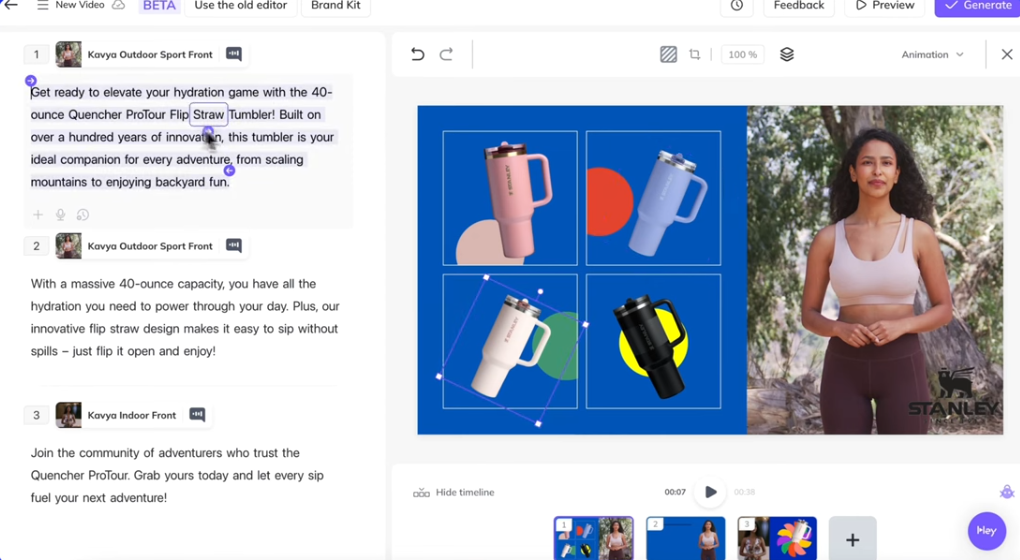
    AI can simplify the first stage of production. With the right inputs, an AI app video ad generator can turn an app description and screenshots into several short-form ad concepts that are ready for creative testing.

    What makes a good mobile app video ad?

    A mobile app video ad should communicate value quickly. It does not need to explain every feature. Its job is to make the right audience understand three things:

    1. What problem does the user have?
    2. How does the app help solve it?
    3. Why should the user learn more or install the app?

    Strong app ads usually have a clear opening hook, a simple product demonstration, and a direct call to action. The message should be understandable even when the viewer is watching without sound, so captions and visual context are important.

    The basic workflow for creating an app video ad with AI

    1. Start with the app’s real value proposition

    Before generating a video, write down the main user outcome in one sentence. For example:

    • “Plan a weekly workout in less than two minutes.”
    • “Turn a long document into a short summary.”
    • “Find affordable flights without checking multiple websites.”

    The outcome is more useful than a list of technical features because it gives the script a clear direction.

    2. Prepare the app description and screenshots

    Useful inputs include the app’s store description, website copy, onboarding text, and screenshots of the core workflow. Choose screenshots that show the product in action rather than only showing a logo or a welcome screen.

    The more clearly the input assets show the user journey, the easier it is to create a video that feels relevant to the actual product.

    3. Generate different creative angles

    Do not create only one version of an ad. A single app can be presented through several angles:

    • A problem-and-solution story
    • A quick feature explanation
    • A before-and-after transformation
    • A presenter recommendation
    • A surprising use case

    These angles give a user acquisition team more useful options for testing than simply changing the background color or headline.

    4. Adapt the video to the ad channel

    The same concept may need different edits for different platforms. A TikTok-style ad may need a faster opening and more native pacing. A Meta ad may work better with a direct product demonstration. A YouTube placement may need stronger context in the first few seconds.

    Creative production should therefore begin with the target platform, audience, country, and campaign objective in mind.

    5. Review the result before launch

    AI-generated video still needs a human review. Check the app name, screenshots, claims, subtitles, pronunciation, and call to action. Make sure the video represents the real product and does not promise a result the app cannot provide.

    Three useful formats for app install video ads

    Story-based ads

    Story-based ads show a user facing a familiar problem and discovering the app. This format is useful when the product solves an everyday pain point, such as organization, fitness, learning, or productivity.

    Animated explainer ads

    Animated explainers are useful when the app has a workflow that needs visual clarification. They can connect screenshots, labels, motion, and narration into a simple product explanation.

    Digital-human ads

    Digital-human ads use a presenter-style format to introduce the product, explain a benefit, or recommend a use case. They can be useful for consumer apps that benefit from a more personal and conversational presentation.

    Why creative volume matters

    Paid acquisition performance can change as audiences become familiar with an ad. A creative that performs well today may experience fatigue after repeated exposure. Producing more concepts gives marketers a better chance to discover new hooks and replace declining creatives quickly.

    The goal is not to publish every generated video. The goal is to create enough relevant options to run a disciplined testing process.

    Create your next app video ad with Apptovid

    Apptovid helps mobile app teams turn an app description and screenshots into short-form video ad concepts. Choose from story-based, animated explainer, and digital-human formats, then use the resulting creatives to support your testing workflow.

    Create an app video ad with Apptovid

  • Operating Strategies for Small-Scale App Developers on Video Platforms with Limited Budgets

    For small-scale app developers with limited budgets, promoting an app on video platforms such as YouTube requires a highly targeted, cost-efficient, and execution-focused strategy. The core principles are simple: organic growth, niche positioning, and maximizing the value of every piece of content.

    This article provides practical guidance from three perspectives:
    YouTube content marketing, SEO & ASO alignment, and community-driven growth, helping indie developers and small teams achieve sustainable exposure without relying on paid advertising.


    1.Niche Positioning: Avoid Competing Head-On with Large Developers

    Small developers rarely win by targeting broad, highly competitive keywords or audiences. Instead, success comes from anchoring the app around specific user pain points or niche use cases, allowing you to build a focused and loyal audience.

    How to Apply This on YouTube

    Use long-tail keywords in your video titles, descriptions, and tags.
    Long-tail keywords are usually made up of three or more words and have:

    • Lower search volume
    • Lower competition
    • Much clearer user intent

    Although each keyword may bring limited traffic individually, their combined volume can be substantial—and conversion rates are often significantly higher than broad keywords.


    2.Content Strategy: Low Cost, High Value Video Creation

    With limited budgets, content quality matters far more than production polish. You do not need expensive equipment or professional editing.

    Use free screen recording tools and AI video ad generators to create videos that solve real user problems.

    Focus on the following three core content types

    2.1 Problem-Solving Tutorials (Highest Conversion Potential)

    Core Logic:

    Start with a specific user problem, then demonstrate how your app solves it. The app naturally becomes the “answer” to the problem presented in the video.

    Production Tips:

    • Record your screen using free tools such as OBS Studio or QuickTime
    • Add voice-over narration; no need to appear on camera
    • Ideal video length: 3–8 minutes (a strong balance between YouTube’s algorithm and user attention span)

    2.2 Niche User Story Videos (Build Trust and Emotional Connection)

    Core Logic:

    Show how real users—or yourself as the target user—use the app to improve daily workflows or solve specific challenges.

    Encourage users to:

    • Share original usage content
    • Participate in feature challenges or usage streaks
    • Earn early access or badges for testing new features

    This approach strengthens community identity and increases retention.


    2.3 App Updates & “Behind-the-Scenes” Content (Increase Retention)

    Core Logic:

    Turn product updates into content opportunities. Share your development journey and actively involve users in the roadmap.

    Small developers have a unique advantage here—users are often more willing to support independent creators than large corporations.

    Examples:

    “I Updated the App Based on Your Most Requested Feature”

    “Building an App with Zero Budget in 3 Months: What I Learned”

    Production Tips:

    • Keep videos short (2–5 minutes)
    • Maintain an informal, authentic tone
    • Encourage comments and feedback to boost engagement and algorithmic visibility

    3.SEO and ASO Alignment: Maximize Organic Exposure Without Ads

    YouTube is the second-largest search engine in the world, making search optimization essential.

    For app developers, aligning YouTube SEO with App Store Optimization (ASO) creates a seamless user journey:
    Search → Watch → Download

    3.1 Build a Product Website and Optimize for SEO

    Keyword Research (Free Methods):

    • Use YouTube autocomplete suggestions related to your niche
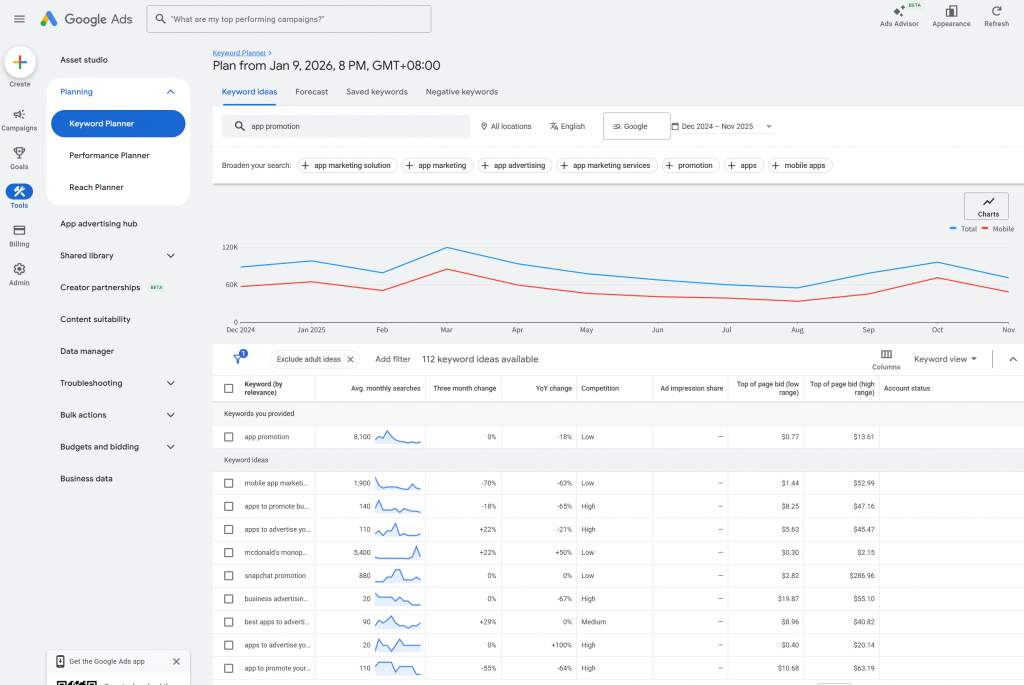
    • Explore low-competition keywords with tools like Google Ads
    • Review “related searches” on Google
    • Analyze competitors’ YouTube titles, descriptions, and tags within your niche

    3.2 ASO Coordination

    Use the same keywords across:

    • App title
    • Subtitle
    • App description
    • YouTube videos

    This improves discoverability when users search for your app after watching a video and strengthens ranking consistency.


    4.Community Building on YouTube: Turn Viewers into Co-Creators

    With limited budgets, word-of-mouth is your most powerful marketing channel.

    YouTube’s comment section—and the Community tab (unlocked after 1,000 subscribers)—are ideal spaces for relationship building.

    Best Practices

    • Reply to every comment, especially within the first 24 hours
    • Ask open-ended questions to encourage discussion
    • Invite users to share feature requests or usage challenges

    Once you have a small core audience, consider moving them to free community platforms like Discord or Telegram to:

    • Share exclusive updates
    • Collect feedback
    • Encourage user-generated tips and tutorials

    These users often become your strongest advocates.


    5.Collaborate with Niche Creators

    Partner with small creators (1,000–10,000 subscribers) rather than large influencers.

    They typically have:

    • Higher engagement rates
    • More authentic audiences
    • Greater willingness to collaborate in exchange for free access or feature exposure

    Choose creators whose content naturally aligns with your app’s use case.


    6.Repurpose Content for TikTok and Other Short-Form Platforms

    Do not rely solely on YouTube’s algorithm.

    Repurpose your videos into 15–60 second clips and distribute them across:

    • TikTok
    • Instagram Reels
    • X (Twitter)

    Add clear calls to action, such as:

    “Watch the full tutorial on YouTube to learn how to organize your research notes.”

    Also share content in:

    • Relevant subreddits
    • Quora answers
    • Facebook groups

    7.Metrics That Actually Matter (Avoid Vanity Metrics)

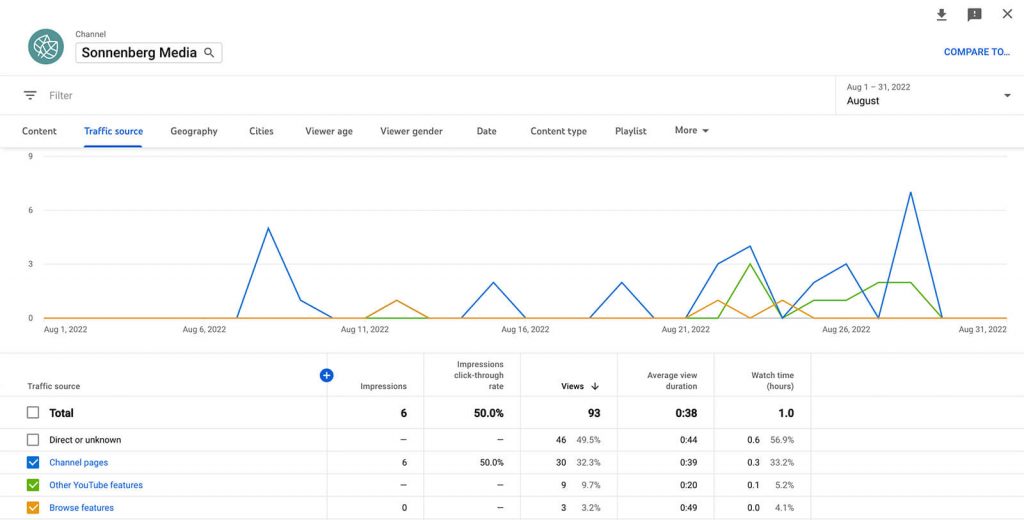
    Use YouTube Studio and focus on these core indicators:

    Watch Time

    YouTube prioritizes videos with longer watch time.

    • Target average watch time: 3+ minutes
    • Improve by optimizing the first 10 seconds or shortening videos

    Click-Through Rate (CTR)

    • Healthy CTR for niche content: 5%–10%
    • Optimize thumbnails and titles if CTR is low

    Conversion Rate

    Track how many viewers download your app.

    • Use short links (e.g., Bitly) to measure clicks
    • Track installs via App Store Connect or Google Play Console
    • Target conversion rate: 2%–5%

    Final Advice: Consistency and Patience

    Organic growth on YouTube takes time. Do not expect instant results.

    Commit to:

    • Consistent publishing (at least once per week)
    • Delivering genuine value
    • Actively engaging with your audience

    Over time, your channel will grow—and so will your app—without spending a single dollar on ads. For small-scale app developers, this is the most sustainable and cost-effective growth strategy available.

  • Top AI Video Tools for App & Game Ads: URL-to-Video and Hook-Based Generation

    As app and game marketing becomes increasingly competitive, video creatives are no longer a “nice to have” — they are the core driver of performance. With the rise of AI video generation tools, advertisers now have more options than ever to produce promotional videos at scale.

    However, not all AI video tools are built for advertising, and even fewer are truly optimized for app and game promotion. In this article, we compare the most common AI video generation approaches on the market, focusing on URL-to-video capabilities, model logic, and their limitations in real-world ad campaigns.


    The Traditional AI Video Generation Approach

    Most existing AI video tools follow a similar logic:

    • Extract screenshots, scenes, or text descriptions
    • Automatically stitch assets together
    • Apply predefined templates, transitions, and background music

    In this setup, AI essentially acts as an automated video editing assistant. While this improves production efficiency, it does not mean the AI understands the app or game itself.

    As a result:

    • The generated videos often lack clear advertising hooks
    • Creative logic is shallow or repetitive
    • The focus is on visual assembly rather than conversion performance

    More importantly, many tools are built around the idea of generating one complete video, rather than supporting the realities of modern performance marketing.


    Why “One Video” Is Not Enough for App Advertising

    In real-world advertising, success depends on:

    • Multiple creative variants
    • High-frequency testing
    • Rapid iteration and elimination

    A single polished video cannot meet these requirements:

    Most traditional AI video tools evaluate success based on how “good-looking” the output is. They emphasize clean visuals and smooth transitions while ignoring the most critical factor in short-form advertising: the first three seconds.

    Without a strong opening hook, users scroll away before the message is delivered. Fixed templates and repeated structures also lead to high creative similarity, making videos easy targets for platform duplicate-content detection.


    Two Advertising Eras: What Changed?

    Early Stage: Low Creative Pressure

    In the early days of mobile advertising, platform algorithms were relatively simple. Even with limited creative diversity, ads could still perform well. Repetitive content was tolerated, and creative fatigue built up slowly.

    Today: High Frequency, High Sensitivity

    Today’s environment is very different. AI tools are widely used, and creative production has scaled dramatically. As a result:

    • Creative homogenization is widespread
    • Ad fatigue occurs much faster
    • Platforms demand stronger early engagement signals

    Modern algorithms prioritize retention, CTR, and creative diversity. Traditional AI video generators struggle to support high-frequency, performance-driven campaigns.


    Why Hooks Decide Whether an Ad Survives

    In today’s short-form ecosystem — dominated by TikTok, Instagram Reels, and YouTube Shorts — the hook determines everything.

    The first 1–3 seconds directly impact:

    • Initial retention
    • Early CTR
    • Whether the platform continues distributing the ad

    If the hook fails, the ad never scales — regardless of how polished the visuals are.

    This is why generating multiple hooks is more important than generating one “perfect” video.


    Comparing AI Video Tools for Promotion

    Most AI-powered video generation tools for marketing purposes are more geared towards e-commerce products. They can extract product images and page descriptions from e-commerce product links to integrate video, or automatically generate complete videos based on text/script descriptions and source materials.


    1.General URL-to-Video Tools(Taking Creatify as an example)

    These ai video creation platforms convert web pages or text content into videos by summarizing and visualizing information.

    Strengths

    • Fast content-to-video conversion
    • Flexible for blogs and brand content

    Limitations

    • Not optimized for app or game promotion
    • Limited understanding of UI, gameplay, or feature hierarchies
    • Weak alignment with performance marketing needs

    2.Prompt-Based Generative Models(Taking Heygen as an example)

    Text-to-video models generate videos purely from prompts.

    Strengths

    • High creative freedom
    • Visually impressive outputs

    Limitations

    • Cannot automatically parse Google Play URLs
    • Require manual scripting and prompting
    • Not designed for scalable ad production
    • Weak connection to real product features
    • Leaning towards verbal delivery.
    • More like AI video editing tools

    The Core Limitation Across Most Tools

    Across categories, most AI video tools share the same structural limitation:

    They optimize for video creation, not advertising performance.

    They do not:

    • Understand advertising hooks
    • Generate large-scale hook variations
    • Adapt to platform-specific performance signals

    As a result, they struggle to support:

    • High-frequency campaigns
    • Creative testing at scale
    • Long-term CPI optimizationLong-term CPI optimization

    In short, existing video tools tend to focus on video synthesis based on material descriptions or emphasize character avatars and voice synthesis.


    A Hook-First Approach to AI Video Advertising

    Modern app and game advertising requires a different mindset.

    Instead of asking:

    “How do we generate a good-looking video?”

    The real question is:

    “How do we generate enough hook variations to find what actually converts?”

    With a hook-first AI approach, a single app or game can generate dozens of video variants, each with a unique opening scenario. These hooks can be tested rapidly to identify which creatives are able to scale.

    Using our AI tool, you can:

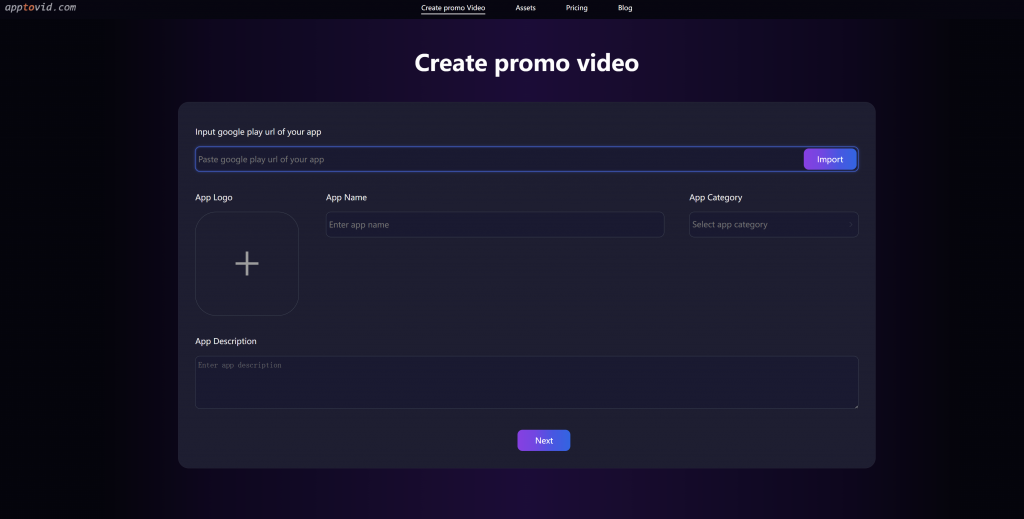
    • Input a Google Play URL
    • Wait a few minutes
    • Automatically receive multiple promotional videos with different hook openings

    Uploading screenshots or gameplay footage is optional — not required.


    Conclusion: The Future of AI Video Ads

    Traditional AI video tools helped reduce production costs. But in today’s advertising landscape, efficiency alone is no longer enough.

    The future belongs to AI systems that:

    • Understand advertising logic
    • Generate creative diversity at scale
    • Focus on hooks, testing, and performance — not just visuals

    If you are struggling with creative fatigue, limited scalability, or declining ad performance, it may be time to rethink how your AI video tools work.

    Try a hook-first approach — and let performance, not templates, decide what scales.


  • Top AI Tools for Creating Promotional Videos for Apps and Games

    The Problem with Traditional AI Video Advertising

    Most traditional ai video ads generator generate promotional videos by extracting in-game scenes, characters, and screenshots, then stitching them together with game descriptions and preset copy. In this process, AI functions more like an automated video editing tool than a true creative system.

    As a result, these tools do not understand the game itself, lack advertising “hooks,” and fail to build a coherent creative logic. Hence, the hook-up ads are often visually acceptable but creatively shallow.

    At the same time, most mainstream AI video tools on the market are designed with a single goal in mind: generating one complete video. This “single-video mindset” does not align with real-world advertising requirements, which demand multiple variants, high-frequency testing, and rapid creative iteration.

    In performance marketing, relying on a single video is not only inefficient—it is fundamentally ineffective.


    Why Traditional AI Video Ads Fail in Modern Advertising

    Another common issue is that these tools evaluate success based on how polished the visuals look, rather than how well the ad converts. They emphasize visual refinement while ignoring user behavior and platform dynamics.

    Specifically, they fail to address the critical first three seconds—the golden window where users decide whether to keep watching or scroll away. Without a strong hook, users are never placed into a relatable or compelling scenario that allows them to instantly connect with the game or app.

    Moreover, fixed templates and repetitive structures produce highly similar videos, which are easily identified by platforms as duplicate or low-value content, significantly limiting delivery potential.


    Two Advertising Eras: Then vs. Now

    To understand why this approach no longer works, it’s important to look at the evolution of advertising platforms.

    Early Stage: Low Competition, Simple Algorithms

    In the early days, platform algorithms were relatively simple. Even with limited creative assets, platforms tolerated repetitive content, and ads could still perform reasonably well.

    Today: High Frequency, High Sensitivity

    Today’s environment is entirely different. With AI tools becoming widely adopted for ad production,creative homogenization combined with high-frequency exposure has dramatically raised platform standards.

    Algorithms now demand:

    • Stronger early engagement signals
    • Higher creative diversity
    • Faster creative refresh cycles

    As a result, ad fatigue sets in faster, and traditional AI video generators can no longer support high-frequency, performance-driven advertising.


    Why Hooks Matter More Than Ever

    What modern advertisers need is not just another AI video generator, but an AI tool that can identify and generate effective entry scenarios—hooks—based on the game or app itself.

    In today’s short-form distribution ecosystem—dominated by TikTok, Instagram Reels, and YouTube Shorts—the hook determines whether an ad survives.

    Hooks capture the golden three seconds:

    • The first 1–3 seconds determine user retention
    • Retention directly affects initial CTR
    • CTR influences whether platforms continue allocating traffic

    Simply put, hooks decide whether your ad gets scaled or buried.


    Why Multiple Hooks Beat One “Perfect” Video

    In modern performance marketing:

    Generating multiple hooks is far more important than generating one “good-looking” video.

    Different hooks create completely different ad behaviors—even when using the same core visuals. Testing multiple hooks allows advertisers to quickly identify which creative angles can scale and which should be eliminated.


    A New Approach: Hook-First AI Video Generation

    With our AI tool, you can generate unlimited hook variations from the same game or app visuals. This allows you to rapidly test, iterate, and scale creatives without rebuilding videos from scratch.

    All you need to do is:

    • Input your app or game URL
    • Wait a few minutes
    • Automatically receive multiple promotional videos, each with a different hook opening

    If you want the AI to understand your product even better, you can optionally upload screenshots or video clips—but this is not required.


    Ready to Scale Your Ad Creatives?

    If you’re struggling with creative fatigue, low CTR, or limited scalability, ai video generator is built to address exactly these challenges.

    Try it now—and experience how hook-driven, scalable AI creatives can transform your app or game advertising performance.